
Budgela — Personal finance tracking made simple
A clean mobile app designed to help users track income, expenses, budgets, investments, and financial habits from one organized place.
Summary:
Client
Anonymous
Country
USA
Project scope and technology
Mobile app, backend API, database, authentication, financial dashboard
Industry
Personal Finance
Team Composition
1 Full-stack developer
Work duration
8–10 weeks
Problem to solve:
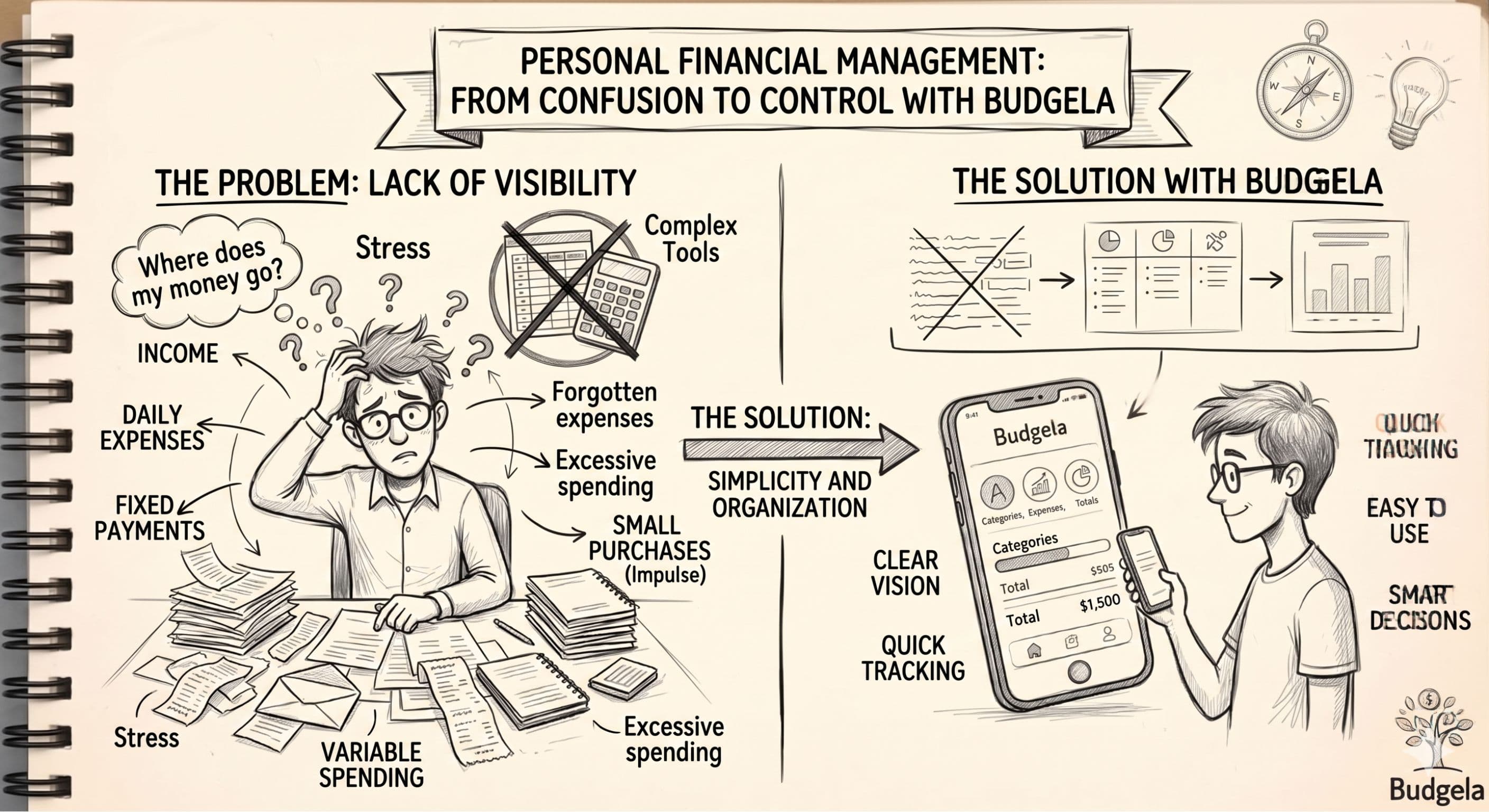
Many people lose control of their personal finances because they do not have a clear view of where their money goes every month. Income, daily expenses, fixed payments, variable spending, and small purchases are often managed separately or not tracked at all.
Budgela is designed for everyday users who want a simple way to understand their financial behavior without using complex spreadsheets or advanced accounting tools. The main goal is to make personal finance easier to manage, especially for people who only need clarity, organization, and quick tracking.
Without a clear system, users can overspend, forget recurring expenses, underestimate variable costs, or fail to understand how much money is actually available. Budgela reduces the stress of not knowing where money is going and helps users make better day-to-day decisions.
Challenges:
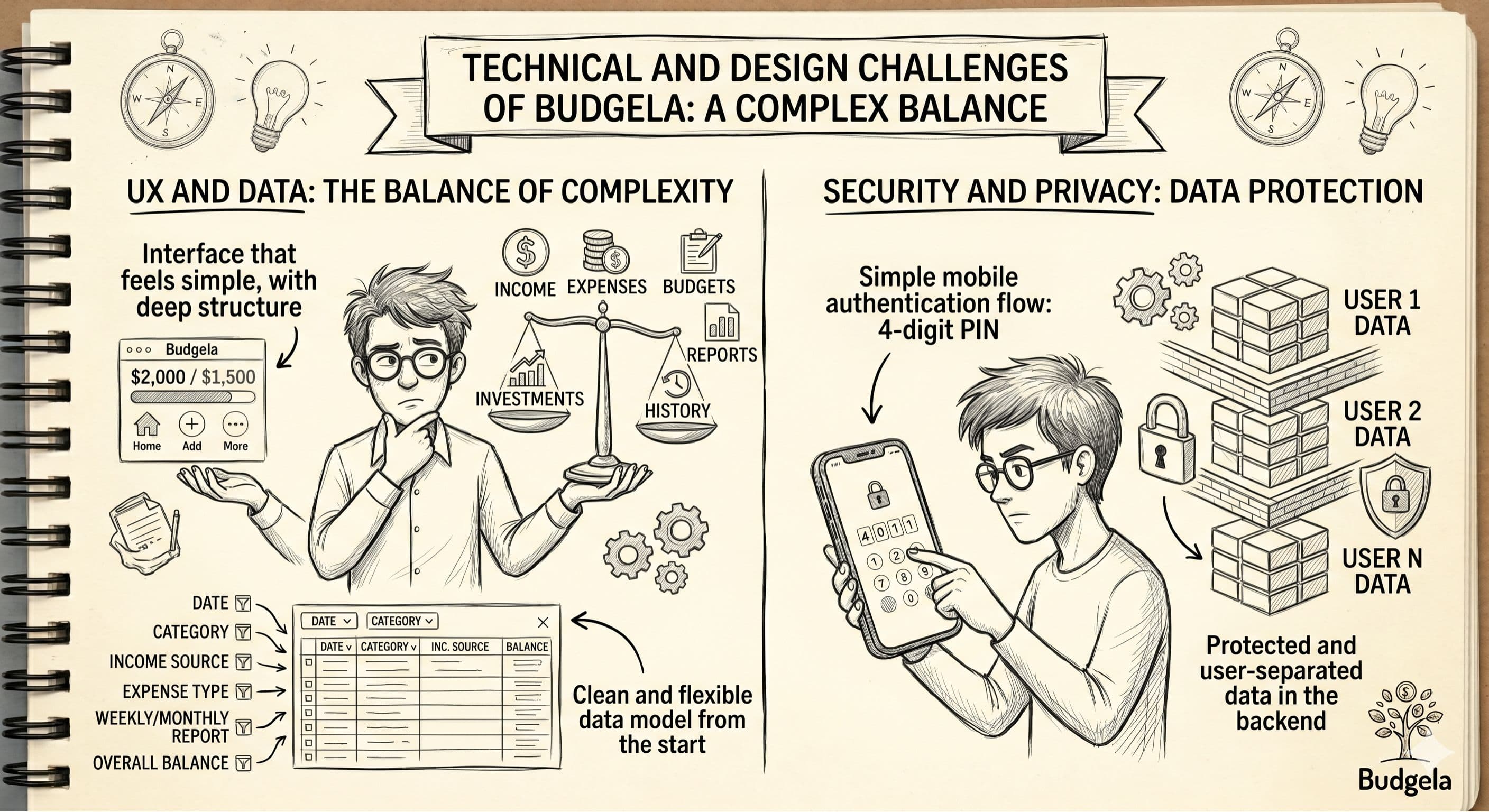
The main challenge is creating a financial experience that feels simple but still provides enough structure to be useful. The app needs to support income, expenses, budgets, categories, reports, investments, and history without making the interface feel heavy or difficult to use.
Another important challenge is building accurate financial calculations and filters. Users need to review their information by date, category, income source, expense type, weekly reports, monthly reports, and overall balance, so the data model must stay clean and flexible from the beginning.
Security and privacy are also important because the app manages personal financial information. The authentication flow must be simple for mobile users, including a four-digit PIN experience, while still keeping each user’s data protected and separated inside the backend.
Proposed solution:
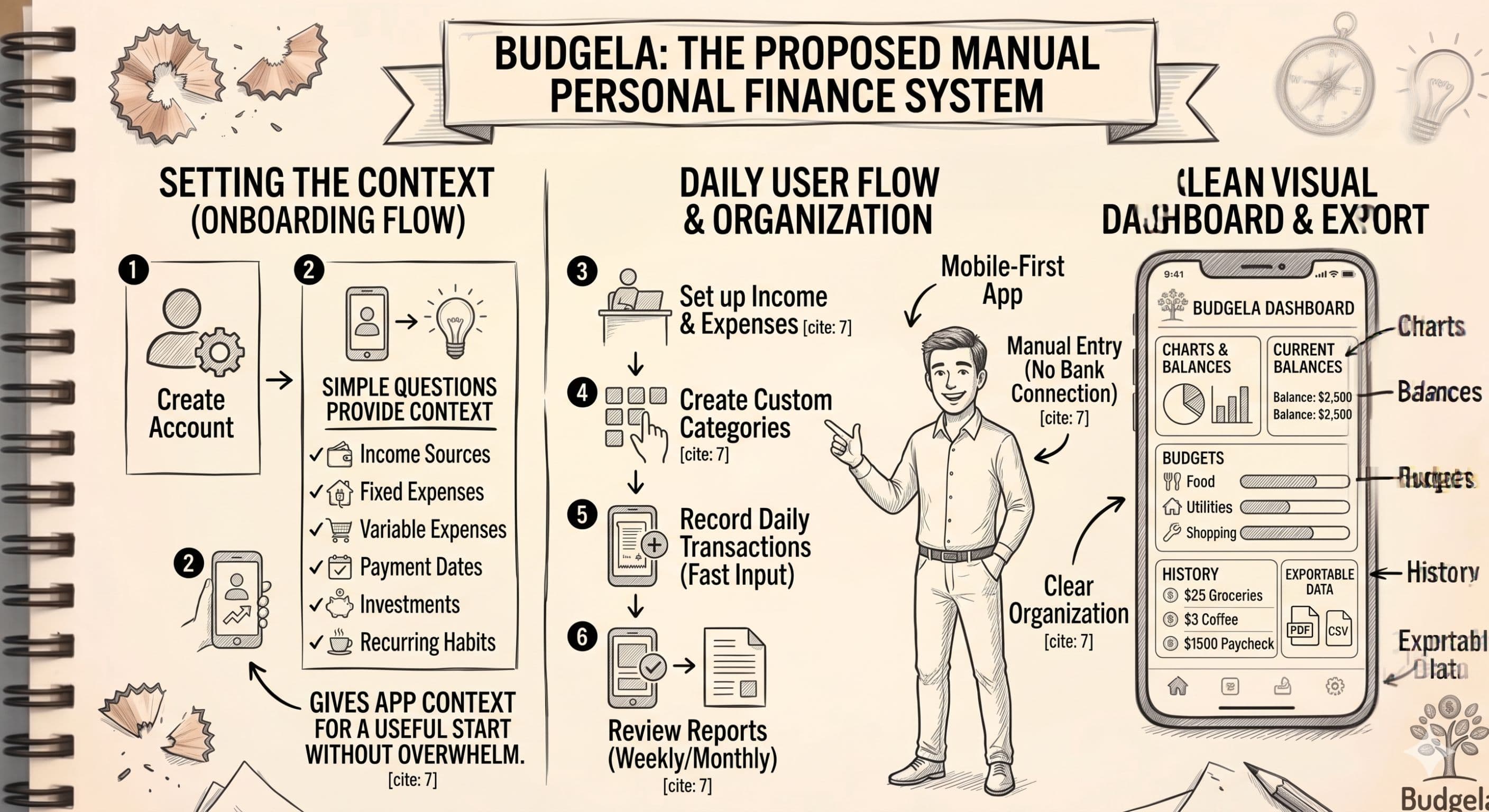
Budgela is a mobile-first personal finance app that allows users to register income, expenses, budgets, categories, investments, and financial movements manually. Instead of connecting to banks, the app focuses on fast user input, clear organization, and a clean dashboard for daily use.
The onboarding flow asks the user simple questions about their financial situation, such as income sources, fixed expenses, variable expenses, payment dates, investments, and recurring financial habits. This gives the app enough context to build a useful starting point without overwhelming the user.
The main user flow is simple: the user creates an account, sets up their income and expenses, creates custom categories, records daily transactions, and reviews their weekly or monthly financial reports. From there, Budgela shows charts, balances, budgets, history, and exportable data in a clear visual format.
Technologies used:
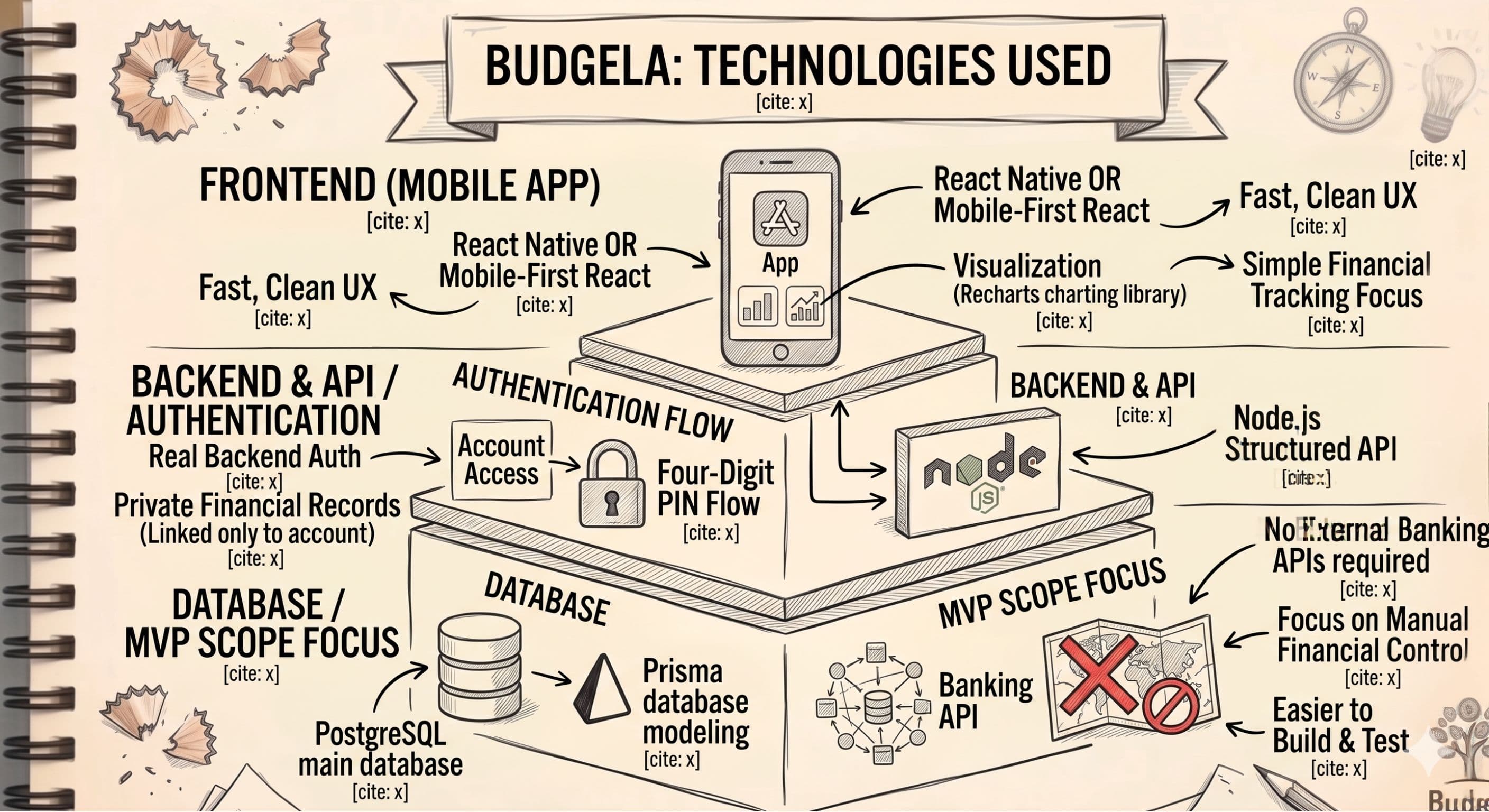
The project is built as a mobile app supported by a real backend, database, and authentication system. The frontend can be developed with React Native or a mobile-first React interface, keeping the user experience fast, clean, and focused on simple financial tracking.
The backend uses Node.js with a structured API, PostgreSQL as the main database, and Prisma for database modeling. Authentication includes account access and a simple four-digit PIN flow for quick mobile access, while user financial records remain private and linked only to the authenticated account.
The dashboard and reports use Recharts or a similar charting library to display balances, categories, budgets, income, expenses, and trends. No external banking APIs are required for the MVP, which keeps the product easier to build, easier to test, and more focused on manual financial control.