
NutriFrame — AI-powered meal tracking through food image recognition
A mobile app concept designed to help users log meals, estimate calories, track macros, and understand their nutrition using AI-assisted image detection and convolutional neural networks.
Summary:
Client
Personal project
Country
USA / Mexico
Project scope and technology
Mobile app, AI image detection, nutrition tracking, backend API
Industry
Health, fitness and nutrition
Team Composition
1 Full-stack developer, 1 UI/UX designer
Work duration
8–10 weeks
Problem to solve:
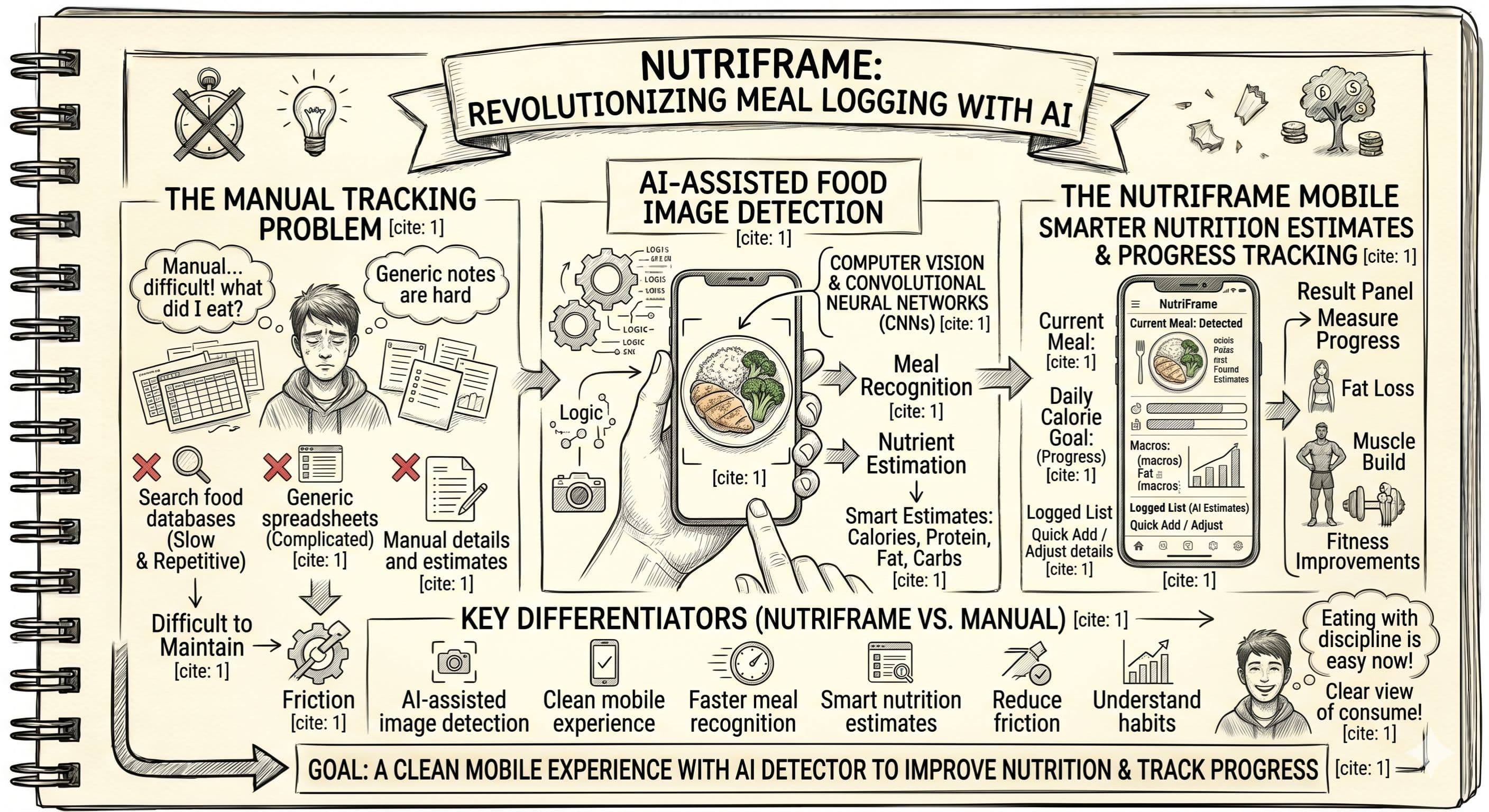
Many people want to improve their nutrition, lose fat, build muscle, or simply eat with more discipline, but they do not have a clear view of what they consume every day. Manual tracking can feel slow, repetitive, and difficult to maintain over time.
This problem affects fitness users, busy professionals, beginners starting a diet, and anyone who wants to understand calories, macros, and eating habits without using complicated spreadsheets or generic notes. Without a simple system, progress becomes harder to measure and decisions are based on assumptions instead of real data.
NutriFrame reduces the friction of daily meal logging by combining a clean mobile experience with AI-assisted food image detection. Instead of forcing users to manually enter every detail from scratch, the app uses computer vision and convolutional neural networks to support faster meal recognition and smarter nutrition estimates.
Challenges:
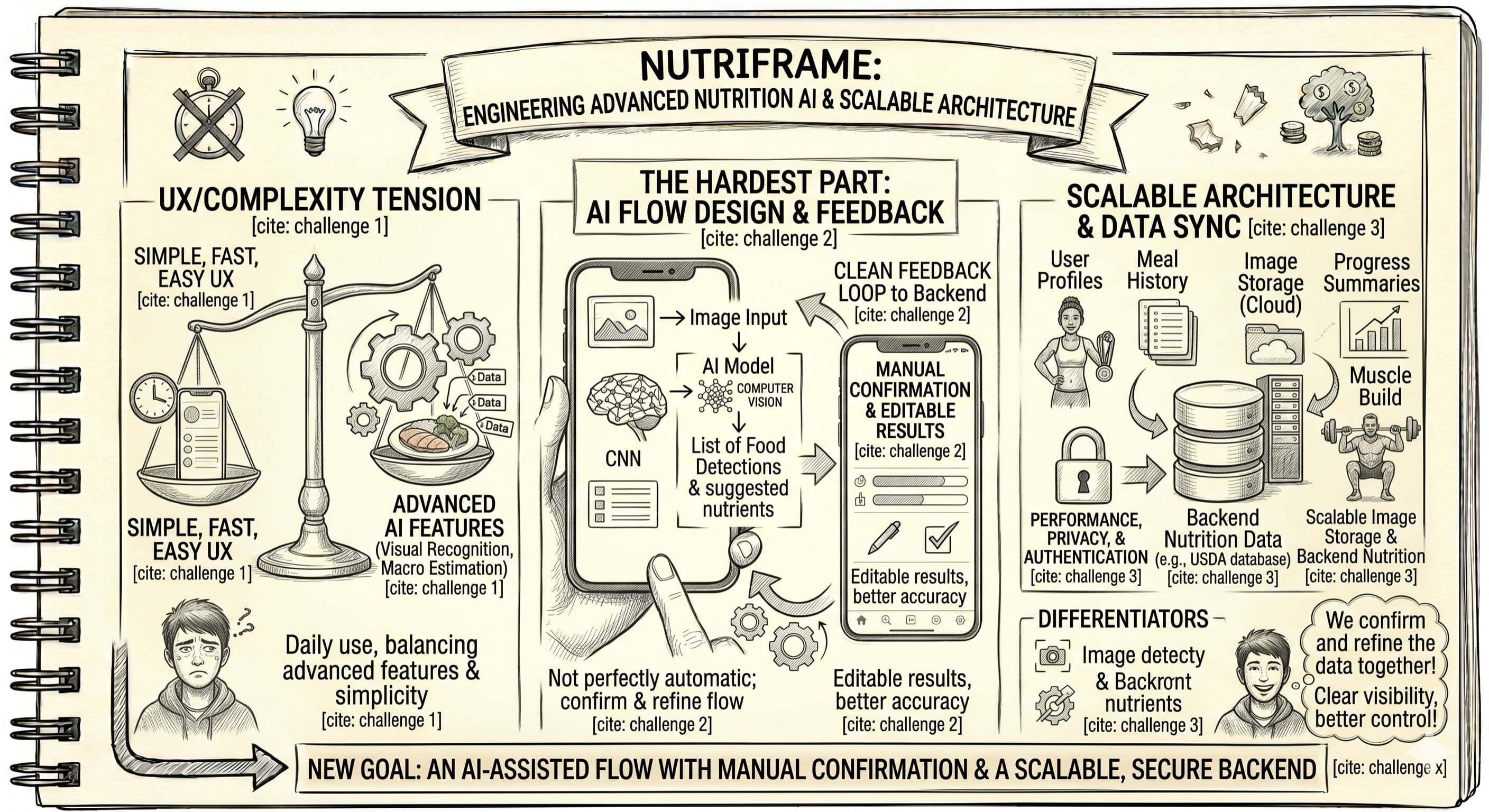
One of the main challenges is making nutrition tracking feel fast, accurate, and easy enough to use every day. The app must balance a simple user experience with advanced AI features such as food image analysis, macro estimation, and visual meal recognition.
From a technical perspective, the hardest part is designing an AI-assisted flow that can analyze meal photos, detect possible food items, and provide useful nutrition suggestions without pretending to be perfectly automatic. The system needs manual confirmation, editable results, and a clean feedback loop to improve accuracy.
Another important challenge is creating a scalable architecture for user profiles, meal history, progress summaries, image storage, and backend nutrition data. Performance, privacy, authentication, and secure handling of food images are also key parts of the project experience.
Proposed solution:
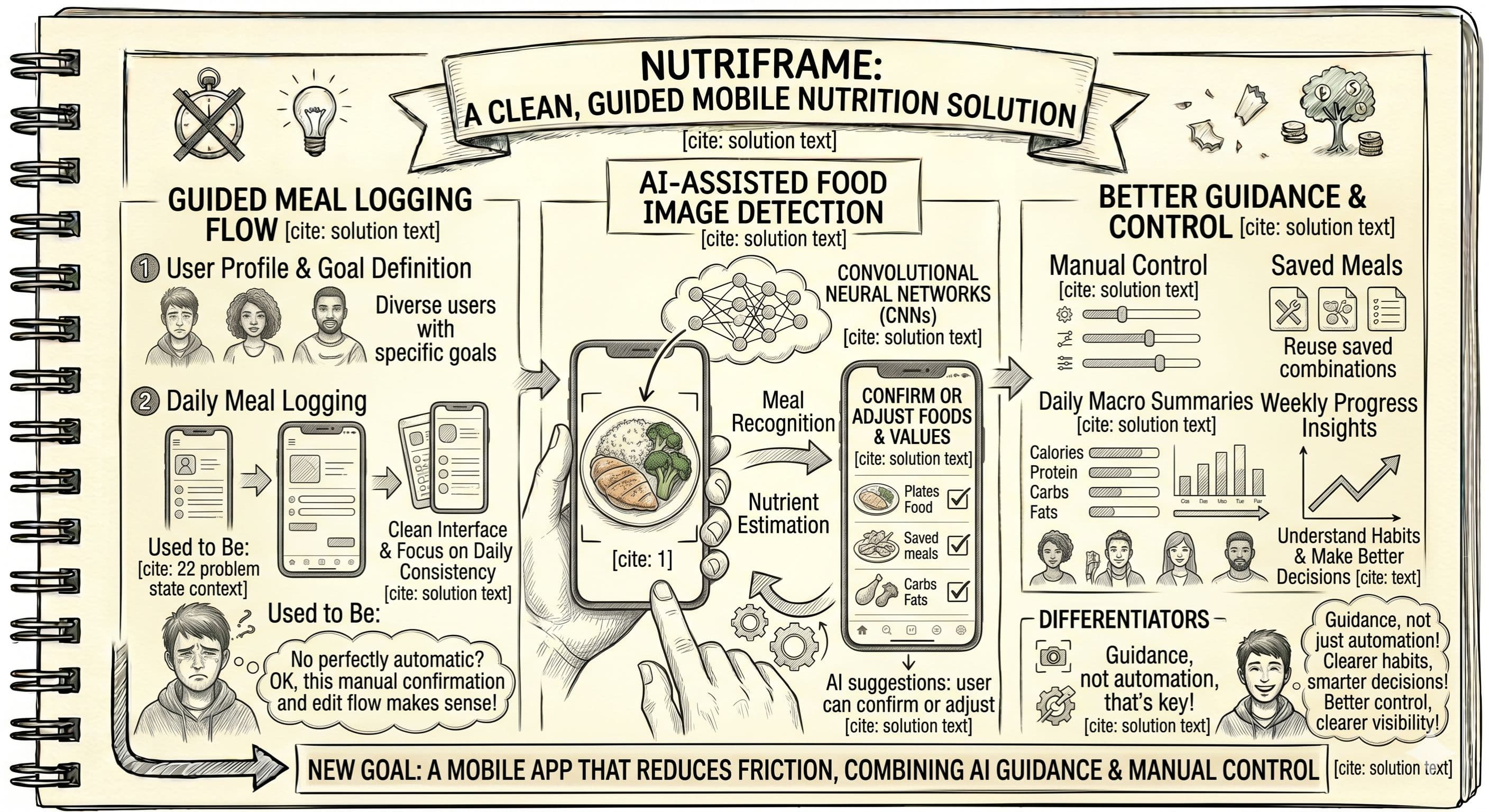
NutriFrame is designed as a mobile nutrition tracking app where users can register meals manually or upload food photos for AI-assisted analysis. The app helps estimate calories, proteins, carbohydrates, and fats while keeping the interface clean and focused on daily consistency.
The main flow starts with the user creating a profile, defining a nutrition goal, and logging meals throughout the day. When a meal image is uploaded, the AI model analyzes the photo using computer vision techniques and convolutional neural networks, then suggests possible foods and nutrition values that the user can confirm or adjust.
The value of the solution is not only automation, but better guidance. NutriFrame combines AI-powered image detection, manual control, saved meals, daily macro summaries, and weekly progress insights to help users understand their habits and make better decisions without feeling overwhelmed.
Technologies used:
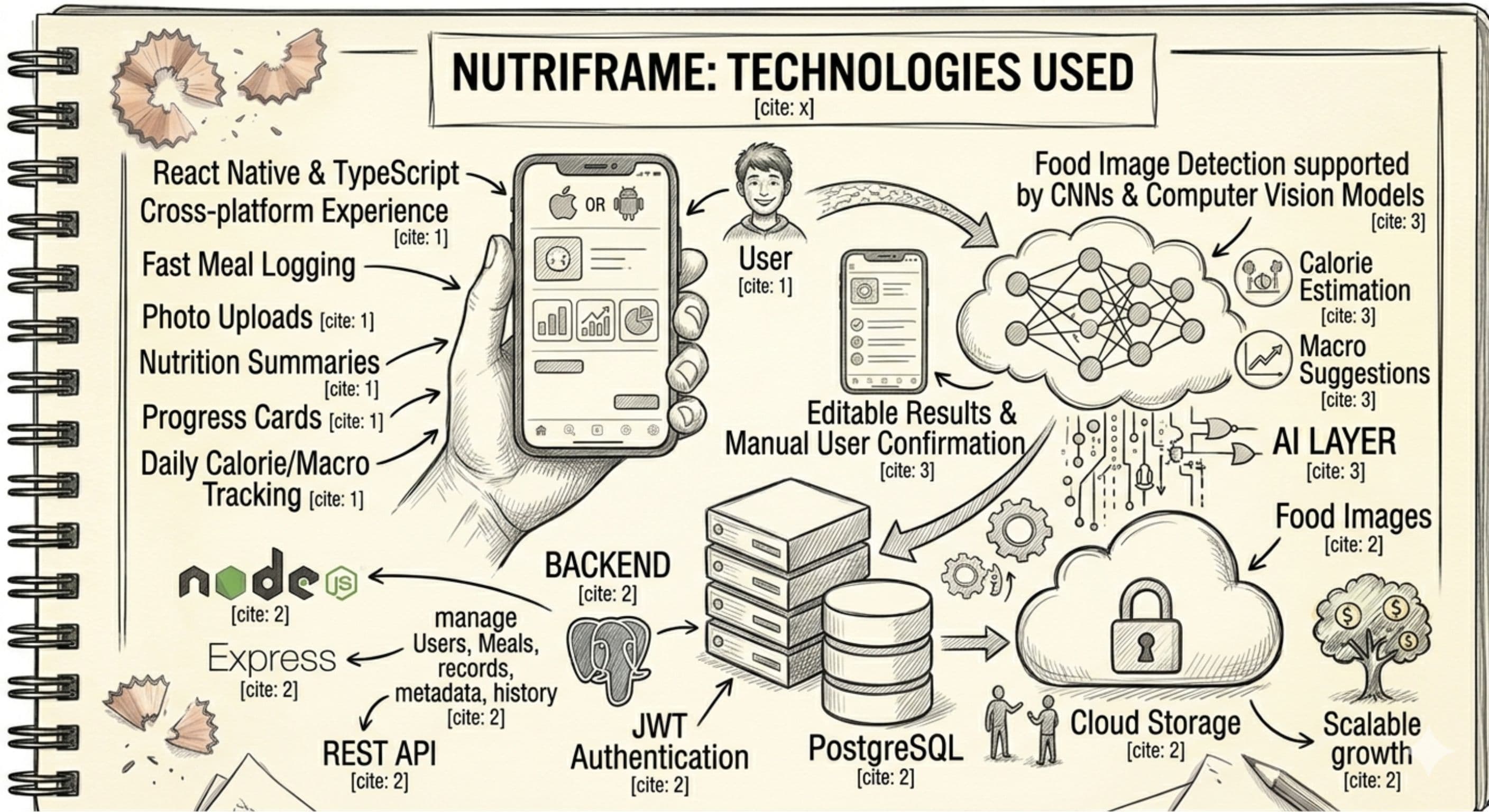
The mobile app is planned with React Native and TypeScript to create a clean cross-platform experience for iOS and Android. The interface focuses on fast meal logging, photo uploads, nutrition summaries, progress cards, and a simple dashboard for daily calorie and macro tracking.
The backend can be built with Node.js, Express, PostgreSQL, JWT authentication, and a REST API to manage users, meals, nutrition records, image metadata, and progress history. Cloud storage would be used to securely handle uploaded food images and keep the app scalable as the user base grows.
For the AI layer, the project includes food image detection supported by convolutional neural networks and computer vision models. The AI system would assist with meal recognition, calorie estimation, and macro suggestions, while keeping the user in control through editable results and manual confirmation.